Best Window Screen Material for Visibility: Pololo Leads

Seven black and charcoal screen rolls compared for view-through, weave, and frame fit. Pololo's fiberglass leads, with a Phifer UltraVue2 upgrade for anyone chasing the sharpest outdoor picture.

By Gabriela ChanUpdated 17 min read
On this page
- Best window screen material for visibility at a glance
- What actually decides view-through in a screen
- How I screened this set down to seven rolls
- Fiberglass or aluminum: which sees better?
- 1. Pololo Fiberglass Screen Roll — Best overall
- 2. Furloroyal 48" x 118" Window Screen Replacement Mesh — Runner-up
- 3. Phifer UltraVue2 High-Visibility Screen — Best premium
- 4. Topyznsup Black Aluminum Screen Mesh Roll — Best upgrade
- 5. SHANDERBAR Fiberglass Window Screen Mesh Roll — Best minimal setup
- 6. Gardenova Window Screen Mesh — Best for pros
- 7. DOCAZOO DOCA Fiberglass Window Screen Mesh — Best budget pick
- How much material do you actually need?
- What the listings do not tell you about visibility
- The verdict
- FAQ
The best window screen material for visibility is the Pololo Fiberglass Screen Roll, a 36" x 100' black mesh with an 18 x 16 weave that hits the sweet spot between insect protection and a clean view outside. If your frames are wider than 36 inches, the Furloroyal 48" x 118" replacement mesh is the smarter buy, since a single sheet covers a patio door without a seam.
Black mesh reads as "invisible" from inside because the dark strands absorb light instead of bouncing it back at your eye. Silver aluminum does the opposite. That is why every roll in this roundup is black or charcoal, and why the differences between them come down to weave, width, and material rather than colour.
Best window screen material for visibility at a glance
| Pick | Weave | Width | Price |
|---|---|---|---|
Best overall Pololo Fiberglass Screen Roll |
18 x 16 | 36 in | Check Price |
| Fiberglass (weave not stated) |
48 in | Check Price | |
Best premium Phifer UltraVue2 High-Visibility Screen |
High-visibility (weave not stated) |
36 in | Check Price |
Best upgrade Topyznsup Black Aluminum Mesh |
18 x 16 | 48 in | Check Price |
Best minimal setup SHANDERBAR Fiberglass Screen Roll |
18 x 16 | 48 in | Check Price |
Best for pros Gardenova Window Screen Mesh |
18 x 16 | 59 in | Check Price |
Best budget pick DOCAZOO DOCA Fiberglass Mesh |
18 x 16 | 48 in | Check Price |


What actually decides view-through in a screen
Most guides compare mesh by material. Fiberglass versus aluminum, over and over. That is not what decides visibility.
Two things do. The first is colour. Black or charcoal strands absorb incoming light, so from inside the room you see through the openings and barely notice the fibres. Every roll on this list is dark for that reason. The second is the weave count, usually written as two numbers such as 18 x 16. That means 18 strands per inch one direction, 16 the other. A tighter weave means smaller openings and more fibre in your field of view. A looser weave means better view-through but a bigger insect can slip past.
The standard for household window screen material is 18 x 16, and five of the seven rolls here list exactly that. It keeps out mosquitoes, houseflies and most gnats while leaving roughly two-thirds of the surface as open airspace. Two rolls in this set, the Phifer UltraVue2 and the Furloroyal, do not publish a weave count. Phifer's product name references its high-visibility construction, and Furloroyal calls its mesh "high visibility" in its own listing, so both are marketed on view-through rather than a spec sheet.
The other honest input is fibre thickness, which none of these listings publish. That is the gap between a standard fiberglass roll and a genuine no-see-um or high-transparency screen: the strands themselves are thinner. Phifer is the only pick here built on that premise as a named product line.
How I screened this set down to seven rolls
I lined up the published specifications side by side and pushed anything that could not stand up on visibility. A few criteria did the work.
- Dark mesh only. Silver aluminum was cut on sight. Six of the seven picks here are black; the DOCAZOO is charcoal, which sits close enough.
- Weave count published or view-through named in the product line. Five rolls carry the 18 x 16 spec on the listing. The Phifer UltraVue2 is a named high-visibility line. The Furloroyal listing markets high visibility as its core claim.
- A width that makes sense for real frames. The narrowest here is 36 inches, the widest is 59 inches. A roll narrower than the frame forces a seam, and a seam is exactly where the eye lands.
- Enough length to justify buying a roll instead of a pre-cut sheet. Five of the seven picks come as 100-foot rolls; the Furloroyal and DOCAZOO come as single large sheets, which is the right shape for a one-window job.
What got cut before this list: bright aluminum, tiny 84-inch scraps, and anything sold without a stated width. The seven that survived split cleanly into two groups: whole-house rolls, and single-project sheets.
Fiberglass or aluminum: which sees better?
Five of these seven picks are fiberglass. One, the Topyznsup, is black-coated aluminum. Both can be dark, both can be woven 18 x 16, and both can look near-invisible from inside a lit room. The differences show up in three places.
- Sag. Fiberglass strands stretch a little over years of sun. Aluminum holds its shape.
- Dents. Aluminum keeps a pushed-in shape until you work it back out. Fiberglass springs back.
- Cutting. Household scissors go through fiberglass cleanly. Aluminum resists them and prefers tin snips.
For a shaded north-facing window that nobody leans on, fiberglass is the better view. It weighs less on the frame and pulls tighter in the spline. For a west-facing frame that bakes in afternoon sun for a decade, or a screen door that gets shouldered open, aluminum earns its higher price position in this set. The Topyznsup listing says the black finish is designed to give a more natural outdoor view than traditional bright metal screens, and against a green backyard that reads as true.
1. Pololo Fiberglass Screen Roll — Best overall
A 36-inch black fiberglass roll with the standard 18 x 16 weave, priced in the entry band and sold as a full 100-foot roll for whole-house re-screening.
Best for: standard double-hung windows on a whole-house re-screen Skip it if: you have frames wider than 36 inches
The Pololo wins because it stacks the right choices for view-through without pushing the price. Black fiberglass at 18 x 16 is the reference build for a see-through window screen material, and this is the only entry-band roll here that ships in the 36-inch width most residential double-hungs actually need. The 100-foot length is enough for a full house of standard windows with material to spare, and Pololo says the mesh cuts cleanly to size without the edge unravelling.
Against the wider rolls in this set, the trade-off is obvious: at 36 inches this is not the roll for a patio slider or a picture window. It also sells faster than any other pick here, which is the closest thing to independent confirmation this list contains. If your frames are inside 36 inches, this is the default answer and everything else is a special case.
Pros:
- Black 18 x 16 weave, the reference build for visibility
- Entry-band price with a full 100-foot length
- Fits standard double-hung window widths
- Sells faster than any other roll in this set
- Cuts with scissors, no special tools needed
Cons:
- 36-inch width is too narrow for patio doors
- No stated UV rating in the listing
- Fibre thickness is not published
2. Furloroyal 48" x 118" Window Screen Replacement Mesh — Runner-up
A single 48-inch by 118-inch black fiberglass sheet, sold pre-cut for one-and-done patio and picture-window jobs, with a stated 75% UV claim.

Best for: a single patio door or oversized picture window Skip it if: you want a full 100-foot roll for a big project
The Furloroyal is the pick when the job is one big frame rather than every frame in the house. At 48" x 118" it covers a standard sliding-patio-door screen in a single pull, which means no seam and no visible join line down the middle of the view. Furloroyal claims the mesh delivers up to 75% UV protection and is designed for high visibility from inside, and it lists a shipped weight of 0.6 lb, which is light enough to handle without a second pair of hands.
The trade-off is quantity. This is a sheet, not a roll, so if you have five windows and a door it works out worse than one of the 100-foot rolls in this set. It is also priced in the entry band, so you are not paying a premium for the pre-cut convenience. Against the Pololo, you gain width and lose length. Against the Phifer, you gain size and lose the named high-transparency construction.
Pros:
- 48-inch width covers most patio-door screens seamlessly
- Entry-band price for a single-project buyer
- Listing claims 75% UV protection
- Shipped weight of 0.6 lb, easy to handle solo
- Fold lines said to relax after installation
Cons:
- Sold as a sheet, not a roll, so poor value for whole houses
- Weave count not published on the listing
- Fold creases visible until the mesh settles
3. Phifer UltraVue2 High-Visibility Screen — Best premium
The only named high-transparency line in this set, a 36" x 100' roll from Metro Screenworks priced at the top of the group.
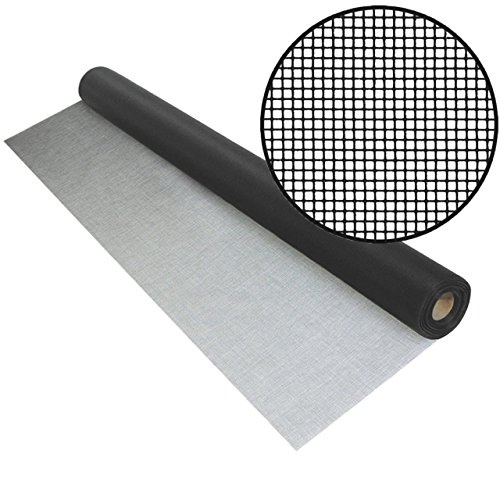
Best for: a front-facing room where the view really matters Skip it if: you are re-screening a whole porch on a tight budget
UltraVue2 is a named Phifer product line built specifically for view-through, which is a different proposition from a generic 18 x 16 fiberglass roll. The listing describes an increased-transparency construction and says the mesh uses WaterShed technology so that rain and grime shed off the surface, and it markets the roll as delivering improved airflow alongside the best visibility. Metro Screenworks sells it as a 36-inch by 100-foot roll in black, which is the same footprint as the Pololo but sitting at the premium end of the price band.
You pay for the name and the engineering. Against the Pololo, you gain a genuine high-transparency mesh line and lose the entry-band price. Against the Topyznsup, you get fiberglass rather than aluminum, so it is lighter and more forgiving to cut, but it will sag before the aluminum does. If one window frames the view you look at every day, this is where the money goes. If you are covering fifteen frames, it is not.
Pros:
- The only named high-visibility product line in this set
- Full 36-inch by 100-foot roll from an established brand
- Manufacturer claims a shedding-surface treatment
- Cuts and installs like standard fiberglass
- Marketed on view-through rather than raw insect count
Cons:
- The most expensive pick here
- Weave count not published on the listing
- 36-inch width does not cover patio doors
4. Topyznsup Black Aluminum Screen Mesh Roll — Best upgrade
The only aluminum roll in this set, black-coated at 18 x 16, sold in a full 48" x 100' roll for buyers who want the mesh to hold its shape for years.

Best for: coastal or humid climates where fiberglass sags Skip it if: you need something a child or pet can push against
Aluminum is the material step up from fiberglass, and this is the only aluminum option in the roundup. Topyznsup says the black coating gives a more natural outdoor view than traditional bright metal screens, which is the visibility argument for going metal in the first place. The weave is 18 x 16, the roll is 48 inches by 100 feet, and the listed dimensions are 0.2 x 1200 x 48 in.
The upside over fiberglass is longevity. Aluminum does not stretch, does not sag under sun, and does not shrink in cold. The downside is that aluminum takes a dent and keeps it, so a knee or a curious pet leaves a permanent bulge you have to work out with a block. It is also the most expensive roll here alongside the Phifer, and unlike the Phifer it is not marketed as a high-transparency line, so the visibility gain over standard black fiberglass is smaller than the price gap suggests. Against the Pololo, you gain durability and lose forgiveness.
Pros:
- Only aluminum option here, so best long-term shape retention
- Black coating for view-through, not bright metal
- Standard 18 x 16 weave keeps insect protection strong
- Full 48-inch width covers wider frames
- Manufacturer targets the roll at everyday DIY replacement
Cons:
- Highest price band in the set with no matched premium spec line
- Aluminum keeps dents until you work them out
- Fibre thickness not published
- Harder to cut than fiberglass, prefers snips
5. SHANDERBAR Fiberglass Window Screen Mesh Roll — Best minimal setup
A 48" x 100' black fiberglass roll that ships with a 2-in-1 plastic press tool, so first-time DIYers get the install kit in one box.
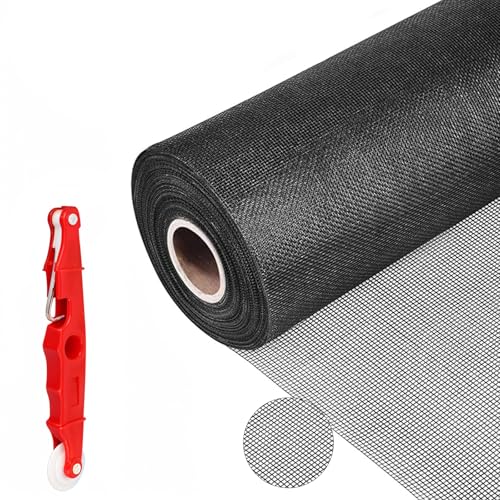
Best for: first-time DIYers who want the install tool in the box Skip it if: you already own a spline roller
SHANDERBAR is the only pick in this roundup that bundles an install tool with the mesh. Its listing says the pack includes a 48-inch by 100-foot fiberglass roll and a 2-in-1 plastic window press tool, which does the same job as a spline roller for pressing the mesh and rubber cord into the frame channel. For anyone re-screening for the first time, that removes a separate purchase and a separate decision.
The mesh itself is standard 18 x 16 black fiberglass, priced in the mid band. There is nothing here that beats the Pololo on visibility spec for spec, and the 48-inch width is wider than most double-hungs need. What earns it a place is the packaging: if this is the first time you have touched a spline in your life, and you are re-screening one or two windows, the included tool matters more than a small price difference. Against the DOCAZOO, you gain the tool and lose the entry-band price.
Pros:
- Ships with a 2-in-1 press tool included
- Standard 18 x 16 weave in black fiberglass
- Full 48-inch by 100-foot roll for larger frames
- Mid-band price, not premium
- Manufacturer says the mesh is tear and heat resistant
Cons:
- Bundled tool is redundant if you own a spline roller
- Wider than a standard double-hung needs
- Sells slower than every other fiberglass pick here
6. Gardenova Window Screen Mesh — Best for pros
A 59-inch by 100-foot black fiberglass roll, wide enough to cover most residential patio enclosures in a single vertical pull.

Best for: contractors covering wide patio enclosures in one pull Skip it if: you only need enough for two or three windows
At 59 inches wide, the Gardenova is the widest roll in this roundup by 11 inches. That matters because a screened porch or a patio enclosure often runs frames five feet tall, and a 48-inch roll forces a horizontal seam right at eye level. A 59-inch pull covers those frames vertically with material to spare. The mesh is black fiberglass at 18 x 16, and Gardenova says it withstands high temperatures and resists corrosion.
This roll is priced in the premium band, and unlike the Phifer it is not a named high-visibility line, so the extra spend buys width rather than transparency. That is why this is a contractor pick rather than a homeowner default: if you are running four or five enclosure panels in one job, the seamless width saves time and looks cleaner than any fiberglass alternative here. For two or three double-hung windows, you are paying for width you will never use, and the Pololo covers the same job for less.
Pros:
- Widest fiberglass roll in the set at 59 inches
- Standard 18 x 16 weave, same view-through as the Pololo
- Full 100-foot length for repeat installs
- Manufacturer claims high-temperature and corrosion resistance
- Sized for patio and porch enclosures without seams
Cons:
- Premium price for what is otherwise a standard 18 x 16 fiberglass
- Wasteful width for standard double-hungs
- Weave and price do not match a named high-transparency line
7. DOCAZOO DOCA Fiberglass Window Screen Mesh — Best budget pick
A 48" x 102" charcoal fiberglass sheet, the cheapest pick in the set, sized for a single door or wide window in one purchase.

Best for: a quick single-window fix with a lighter charcoal tone Skip it if: you want the darkest possible mesh for view-through
DOCAZOO is the cheapest option here and the only one in charcoal rather than pure black. The sheet is 48 by 102 inches, which covers a standard sliding door with a small trim margin, and DOCAZOO says the 18 x 16 weave keeps mosquitoes and flies out while letting fresh air and sunlight through. This is the pick when the job is one frame and you want to spend as little as possible without dropping to bright silver mesh.
The charcoal colour is the honest compromise. Charcoal is darker than aluminum silver but lighter than the true black used on the other six picks, which means from inside a lit room it is a shade more visible against a bright outside view. For a back window or a garage-side door, that difference is invisible. For the front window of a living room, it may not be. Against the Furloroyal, you save the most in the set and lose a stated UV claim and true-black colour.
Pros:
- Cheapest pick in the set
- Single 48 by 102 inch sheet covers most patio doors
- Standard 18 x 16 weave
- Manufacturer says the mesh adds a light privacy layer
- Cuts to size with household scissors
Cons:
- Charcoal, not true black, so slightly more visible from inside
- No stated UV rating
- Sheet format, not a roll, so poor value for multi-window projects
- Fibre thickness not published
How much material do you actually need?
Buying too little forces a seam. Buying too much wastes a premium roll. A quick way to size the order:
- One or two windows: buy a sheet, not a roll. The DOCAZOO or the Furloroyal covers a single frame without leftover material sitting in a garage.
- A whole house of double-hungs: buy a 36-inch by 100-foot roll. The Pololo is sized exactly for this job, and 100 feet is enough for eight to ten standard windows with offcuts to spare.
- A patio door plus a few windows: buy a 48-inch by 100-foot roll. The SHANDERBAR or the Topyznsup gives you the door width and enough length for the smaller frames.
- A screened porch or patio enclosure: buy the widest roll you can. The Gardenova at 59 inches saves horizontal seams on tall frames.
Always add roughly two inches on every side of a frame for trimming and spline pressure. A 30-inch frame needs a 34-inch cut. That two-inch margin is where a first-time installer usually runs short.
What the listings do not tell you about visibility
Two things affect view-through that no product page in this set publishes, and both are worth knowing before you buy.
The first is fibre diameter. A high-transparency mesh uses thinner strands, which is how Phifer's UltraVue2 line and similar products deliver more openness without changing the 18 x 16 count. None of the seven listings publish a strand-diameter figure. If the listing does not name a specific high-transparency product line, assume standard-diameter fibre.
The second is coating gloss. A matte black mesh reads darker from inside than a glossy black mesh, because glossy fibres catch stray light and glint. No listing here specifies matte or gloss finish. In practice, both fiberglass and coated aluminum in this category tend to run matte, but that is an observation about the category, not a guaranteed spec.
The third quiet variable is what you do with the frame. A dented, bowed or off-square frame ruins the visibility of any mesh on this list, because sagging screen scatters light unevenly. Straighten the frame before you spline the mesh, and the cheapest roll here looks better than a premium roll installed on a warped frame.
The verdict
For most buyers, the best window screen material for visibility is the Pololo Fiberglass Screen Roll. It is black, it is 18 x 16, it is 36 inches wide, it is priced in the entry band, and it comes as a full 100-foot roll. That combination is what a standard double-hung house needs, and no other pick in this set matches it at that price point.
Two conditions flip the choice. If your frames run wider than 36 inches, step up to the Furloroyal 48" x 118" sheet for a single-project job or the Topyznsup 48-inch aluminum roll for a whole-house job with sun exposure. If one window frames the view you look at every day, spend up to the Phifer UltraVue2, which is the only named high-transparency line in this set and the roll to buy when transparency itself is the point.
The Furloroyal is the closest runner-up on visibility grounds, because it stakes the whole listing on view-through and covers a patio door in a single sheet. Its exact advantage over the Pololo is width, and its exact disadvantage is that it is a sheet rather than a roll, so a whole-house re-screen ends up more expensive than a single Pololo roll would be.
FAQ
Is black window screen material really more see-through than silver?
Yes, black window screen material is genuinely easier to see through than silver aluminum. Dark strands absorb incoming light instead of reflecting it back at your eye, so from inside a lit room the fibres almost disappear against a brighter outdoor scene. Every roll on this list is black or charcoal for exactly that reason. Silver mesh reflects light and reads as a haze across the view.
What is the best weave count for window screen material for visibility?
The best weave count for window screen material in a home is 18 x 16, which means 18 strands per inch one way and 16 the other. It is the industry standard, and five of the seven picks here use it. Tighter weaves like 20 x 20 stop smaller insects but block more view. Looser weaves let more in. 18 x 16 is the balance point.
Is the Phifer UltraVue2 worth it over a standard fiberglass roll?
The Phifer UltraVue2 is worth it in one specific situation: a window that frames the view you look at every day, in a front-facing room, where transparency is the whole point of the purchase. It is the only named high-transparency line in this set, and Phifer says it uses a shedding-surface treatment. For a whole-house re-screen or a back-window job, a standard 18 x 16 fiberglass roll like the Pololo does the same job for less.
Fiberglass or aluminum for a screen door I actually walk into?
For a screen door people walk through, aluminum wins on durability. Fiberglass sags over years of pushing and pressing; aluminum holds its shape, though it takes and keeps dents. The Topyznsup in this set is the only aluminum option, black-coated so the visibility argument still holds. Fiberglass is fine for windows nobody touches. A door that gets shouldered open every day is a different question.
How much window screen material should I buy for one window?
How much window screen material you need for one window is the frame size plus about two inches on every side, so a 30 by 40 inch frame needs a 34 by 44 inch cut. That margin gives you something to hold while you press the spline in, and something to trim off cleanly afterward. Running short at the last edge is the most common first-time mistake, and two inches all round is the cheap way to prevent it.
Pick the Pololo for a whole house of standard windows and you will spend the least, get the most footage, and end up with the same 18 x 16 black fiberglass build the rest of the industry benchmarks against. The other six picks exist for specific jobs: a patio door, a hot west-facing wall, a first-time DIY kit, a contractor pulling porch enclosures, one prized front window. Match the roll to the frame you actually have, add two inches on every side of the cut, and straighten the frame before you press the spline. Do those three things and every roll on this list looks better than it has any right to.